A History of Social Justice at All Souls
“Let them be remembered in the Church of All Souls with him who took his place among the lowly and went about doing good.”
– Frederick Douglass, 1892
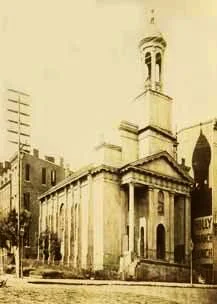
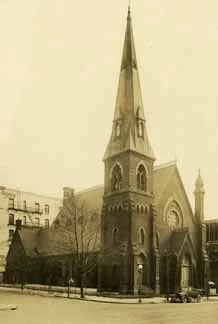
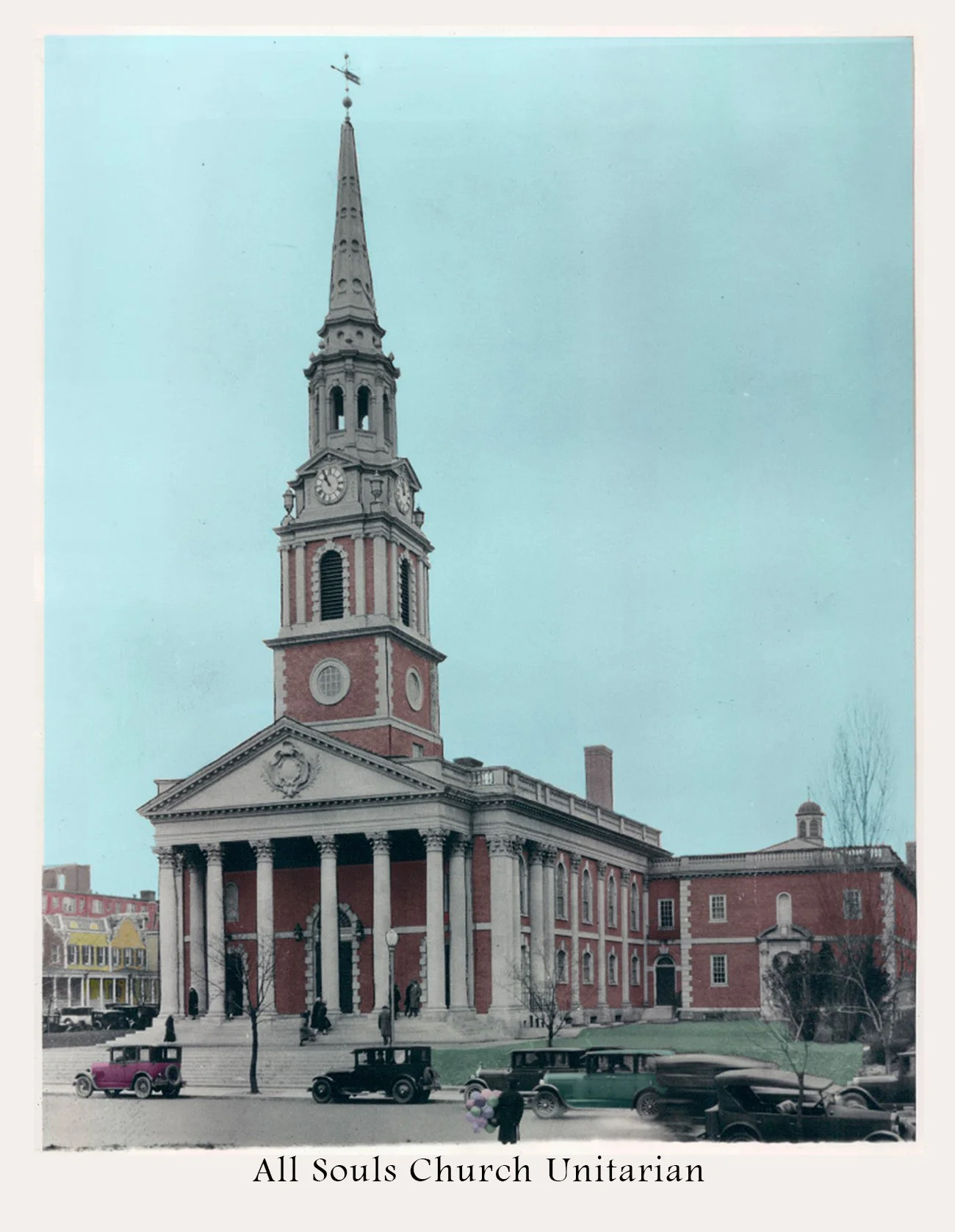
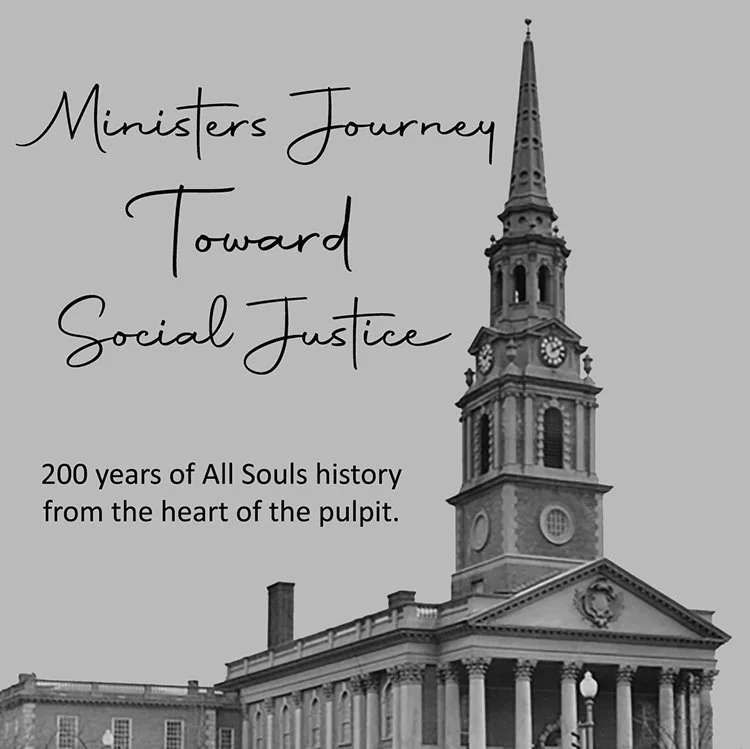
The congregation that is now All Souls was founded in 1821 as the First Unitarian Church. From its opening days, the church has answered a call to serve others and to offer a prophetic voice for justice in the nation’s capital. The following are some highlights from this long history of social justice at All Souls.
- 1821-1865: A Call to Service, Stands Against Slavery
- 1865-1925: Education, Women’s Rights, WWI
- 1925-1950: Early Civil Rights, Youth, Helping Europe and Japan
- 1950-1975: Civil Rights, Helping the Neighborhood, Vietnam
- 1975-present: Central America, South Africa, Continuing Work
1821-1865
Original Call to Service
At the Dedication of the First Unitarian Church on June 9, 1822, Rev. Robert Little (pastor, 1821-1827), called the congregation to service:
“These walls will, I trust, bear witness that ou ogether useless to mankind. Some I hope may be better and wiser for our exertions in the cause of truth. If not in an obvious and direct manner, yet in some effectual way may we have served our generation and promoted the knowledge, the service and the will of the one true God.”
Early Stand Against Slavery
Prior to the Civil War, slavery was legal in the District of Columbia. Although the majority of the early Washington Unitarian congregation was sympathetic with the Southern attitude on slavery, many of the church’s ministers made public statements against slavery. As early as 1824, Rev. Little spoke out:
“Let the ministers of religion show the importance of its (religious) principles to society and as well as to individuals; let them enforce the advantages and obligations of citizenship as well as of domestic life. Let them protest against national vices, against the belief that pomp and show and luxury are marks of national greatness, against the mistaken policy of our ancestors in introducing and accumulating an evil (slavery) destined to bring so much grief upon our nation.”
The Amistad Slave Ship Incident
When captured Africans revolted and seized the Spanish slave ship, Amistad, and sailed it into Boston harbor in 1839, two of the church’s founders became involved. Founder John Quincy Adams came to the slaves’ defense by serving as their attorney. Founder John C. Calhoun argued for the prosecution that the slaves were the property of Spain. The Supreme Count ruled in Adams’ favor and the Africans were allowed to return to the African country of their origin.
Abolitionist Ministers
Despite divisions within the congregation over the issue of slavery, many of the ministers who served the church in the years before the Civil War were abolitionists. These included Edward Everett Hale (1844), Samuel Longfellow (1847), Joseph Henry Allen (1847-1851), Moncure Daniel Conway (1854-1857), William D. Haley (1858-1861), and William Henry Channing (1861-1865). Over time, more and more of the congregation came to oppose slavery.
In his first sermon to the First Unitarian Church, Rev. Conway spoke about the church’s role in denouncing slavery:
“The Church must hold itself ready to pass free judgment on all customs, fashions, ideas, facts, on trade and politics, and in this country more especially hold itself ready to give free utterance in relation to our special n of all sins — human slavery.”
Yellow Fever
In 1855, yellow fever broke out in Virginia. The authorities in Washington declared a “Fast Day,” seeking to persuade God to stem the spread of the calamity. The minister of the First Unitarian Church refused to participate. He declared that the problem was not religious, but a problem of poor labor and living conditions. The congregation generally agreed and raised a large relief fund for the sufferers. The Unitarians were condemned from many of the other pulpits in the city, with some warning that the Unitarians might bring the disease to Washington because of their religious insolence.
The Revere Bell of Freedom
The church bell (cast by the son of Paul Revere and funded in part by President James Monroe) was used for public purposes such as announcing fires until 1861. When the church tolled the bell to mourn the execution of John Brown, it was denounced as the “Abolition Bell” and the city discontinued using it for public purposes.
Church Building Used as a Civil War Hospital
With the outbreak of the civil war, boatloads of wounded soldiers were coming to Washington. Rev. William Henry Channing (minister from 1861-1865) suggested, and the Trustees approved, offering of the church building as a hospital. Members of the congregation volunteered their services to help the wounded. The U.S. Senate offered its chamber as a space for the congregation to meet on Sunday mornings. Meanwhile, Channing also served as chaplain for one of the largest hospitals in Washington, D.C., and later as chaplain for the U.S. House of Representatives.
Help for Freed Slaves
Rev. William Henry Channing demonstrated his interest in the freed African Americans by organizing the Freedman’s Relief Union, of which he served as President. Later he also helped form the Miner Normal School, which would become a part of Howard University years later.
1865-1925
Funding for Education
In the 1880’s, the congregation combined the efforts behind the Miner School and a sewing school for girls in Georgetown known as the Industrial School. The church conducted a day nursery and kindergarten at the school. In 1891 the church started another kindergarten, and successfully encouraged the District government to establish kindergartens as part of the Public School system.
Women’s Rights
At the turn of the century a strong movement for women’s rights developed in the congregation. When Rev. Ida C. Hultin came to Washington to deliver an address before the Women’s Suffrage Convention, there was a movement to call her to the pastorate of All Souls Church. After conservative members objected, the matter was put to a vote by the congregation. Although the vote went against Rev. Hultin, the fact that she was given consideration created a sensation in Washington and in the Unitarian denomination.
World War I
During World War I, All Souls furnished an ambulance for the Red Cross, sold Liberty Bonds, and collected books and other materials for men in the service. The church took up special collections for War Camp Community Services and took on the rehabilitation of a French village after the war. The church’s participation in raising funds for the Red Cross continued after the war.
1925-1950
A Haven for Integrated Groups
Early in the 20th century, All Souls’ dining room was one of the few places in Washington where racially integrated groups could be served. This led Eleanor Roosevelt and others to hold meetings there. This and other early desegregation efforts provided the foundation for the church’s entry into the civil rights movement in the 1950’s and 1960’s.
The Depression
During the Depression, several relief projects were undertaken. Those applying for help at the Church were provided with an opportunity to earn enough to meet immediate needs through funds provided by the Church Welfare Committee.
Youth Services
During the 30’s, the church housed Boy Scouts, Girls Scouts, and Campfire Girls. When the All Souls Recreation Center was offered to a branch of the Police Boys’ Club in 1937, it was reported that shoplifting on Fourteenth Street measurably declined.
Beginning in 1944, church facilites were used during seven summers for an interracial Community Vacation School. A weekday play group that began in the 1930s developed into the interfaith, interracial Meridian Hill Cooperative Nursery School, which operated from 1947 to 1952.
Response to War-Torn Europe and Japan
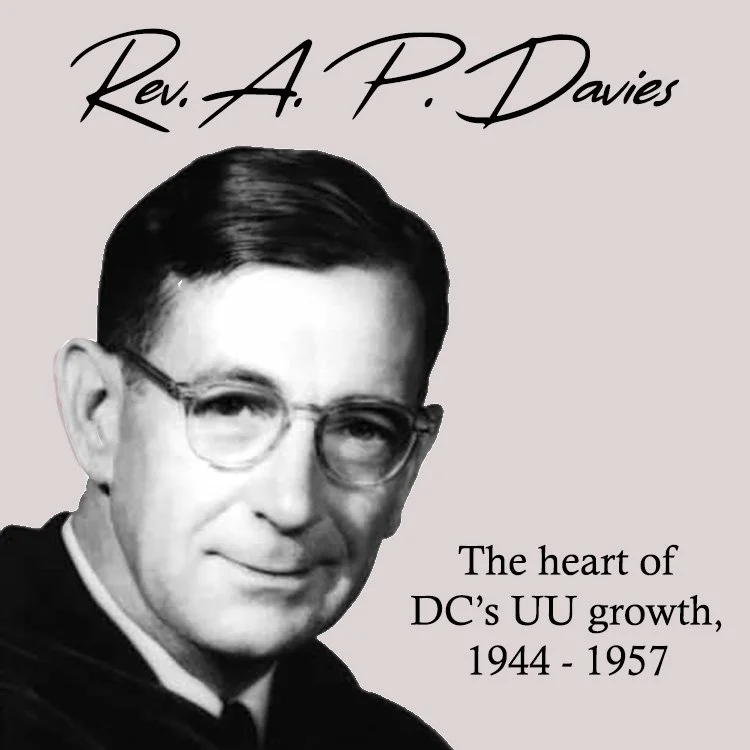
Rev. A Powell Davies, Senior minister from 1944 to 1956, preached a sermon on November 25, 1945, entitled “What Can Anyone do?” He spoke of the desperate need for food in Europe and proposed that the Church collect a fund to supplement what the government might do. More than a hundred tons of canned foods, and more than 32,000 pounds of clothing, contributed not only by Church members but also by many outsiders, were shipped from All Souls church to Europe. Members of the church also contributed for years to a Child Welfare and Educational Mission to Germany.
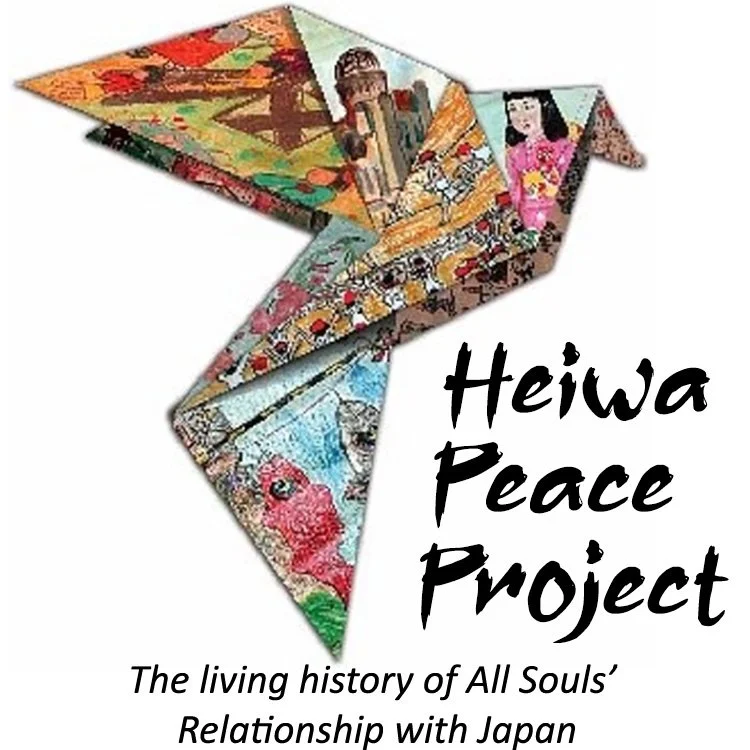
Davies’ February 23, 1947 sermon titled, “In Reply to a Letter from Japan,” resulted in a large shipment of school supplies for the innocent victims of the nuclear bombing of Hiroshima and Nagasaki. A remarkable collection of paintings and drawings by Japanese children was received in appreciation and are still kept in the Church safe.
1950-1975
Civil Rights
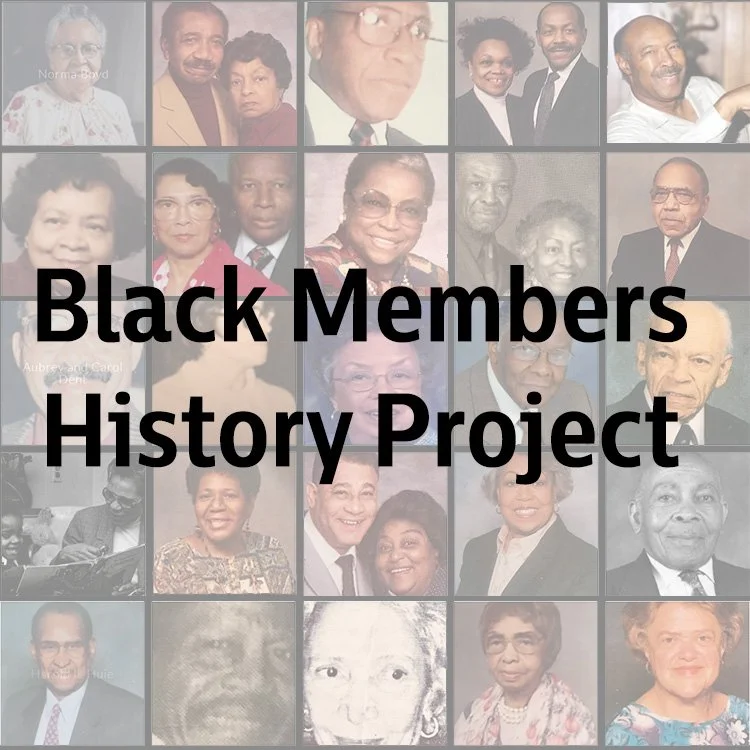
Although a few African Americans, including Frederick Douglass, had attended the church many years earlier, in 1950 the first African Americans were welcomed into church membership.
After a sermon titled, “The Shelter of Good Intentions,” delivered in February 1953, Rev A. Powell Davies (minister from 1944-1956) pledged himself and invited members of the congregation to join him in refusing to patronize eating places and places of entertainment where African Americans were not admitted. A list of non-segregated eating places was made available; more than 40,000 copies were distributed by members throughout the Washington area.
The Police Boys Club No. 10 had been using the facilities of the Church since 1937. It was for white boys only. In 1954, when the Board of Trustees requested that the leaders of the club open the club to all races, they refused and withdrew from the premises. An integrated club was organized under the leadership of the Unitarian Service Committee and still operates as the Columbia Heights Youth Club.
Rev. Duncan Howlett, who served as Senior Minister from 1958 to 1968, also spoke out vigorously on the subject of Civil Rights. On August 28, 1963 he led more than 1000 persons from All Souls Church to the Lincoln Memorial for that impressive Civil Rights March.
The Reverend James Reeb, murdered during the struggle in Selma, Alabama in 1965, served as Assistant Minister at All Souls until several months before his death.
Helping the Neighborhood
Rev. Howlett demonstrated his concern for the war on poverty, not only by sermons, but also by the establishment, in cooperation with the Planned Parenthood Association, of a Birth Control Clinic at the Church. The Girard Street Playground Project begun in 1962. Under the leadership of Rev. James Reeb, the Associate Minister, a Clothing Center was established at All Souls in cooperation with the Commissioners’ Youth Council. The Church members also supported the Poor People’s March in the spring of 1968 through its Center for Surplus Food Distribution. Volunteers also developed a breakfast program for the homeless that continued until 1994.
Following the race riot that swept through Washington after the assassination of Dr. Martin Luther King, Jr., large sections of Washington’s inner city lay in ruin. This included a section on 14th street, only one block from All Souls Church. Under the leadership of member John Shively, the All Souls Housing Corporation was formed. After securing federal funds, 140 housing units were constructed on 14th Street.
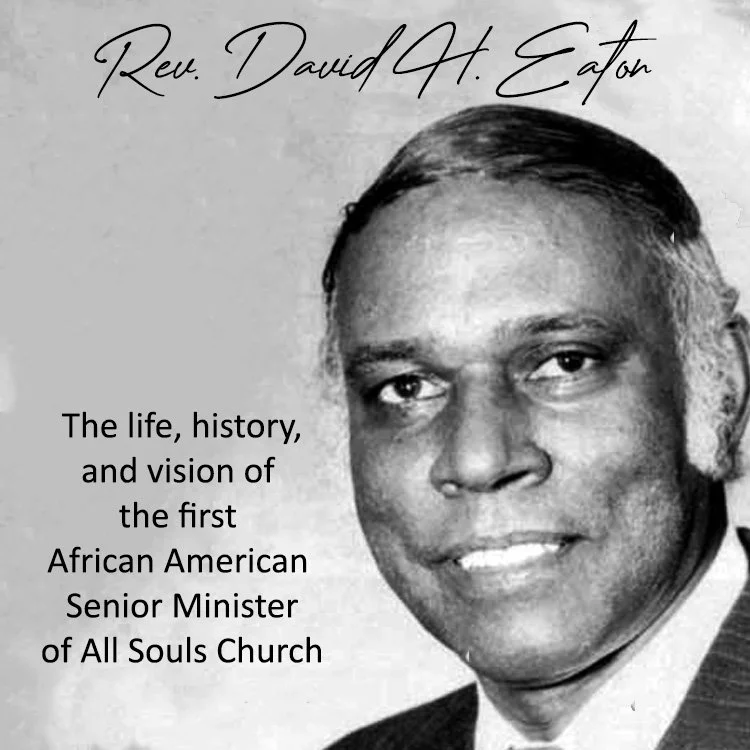
David Eaton, All Souls’ First African American Senior Minister
When he retired in 1968, Rev. Howlett suggested to the congregation that All Souls should consider hiring an African American as its next senior minister. In 1969, Reverend David Eaton was called to be the first African American Senior Minister of All Souls Church. Reverend Eaton brought to the church a prophetic vision, pulpit mastery and commitment to serve the Washington community. He served as member and later President of the District of Columbia Board of Education. His activism encouraged many people and groups to launch or house their activities at All Souls, including the Antioch Law School, the DC Music Center, the DC Rape Crisis Center and the Green Door.
The FBI’s J. Edger Hoover viewed Reverend David Eaton as a threat and planted an agent in the church with instructions to “Remove Reverend Eaton from his congregation.” The plot was revealed under the Freedom of Information Act. Eaton and other Civil Rights activists sued the Federal Government and won.
Vietnam
Committees to oppose the war in Vietnam were formed. Large numbers of All Souls members participated in protest rallies, and All Souls helped house many protesters who came from out of town. The protests continued until American forces were finally withdrawn.
Challenge to D.C. Crime Bill
In 1969, the Nixon administration proposed legislation to fight crime in DC. The bill would have allowed police to enter homes without warrants and without knocking, would have denied bail for certain crimes, and would have allowed persons to be held if they were considered to be a danger to the community. In May 1970, Rev. David Eaton warned the congregation that the proposed bill was one of the most oppressive pieces of legislation ever devised, and compared it to legislation passed under the tenure of Adolph Hitler. He suggested that “any time persons break into your homes unannounced, shoot them.” The resulting headlines carried throughout the nation provoked not only criticism, but a debate on the merits of the legislation. The majority of the Board of Trustees and congregation stood with Rev. Eaton, and by July 19 many of its worse provisions removed.
1975-present
Central America
In the early 1980’s Rev. Eaton challenged members of the All Souls Church congregation to act for social justice wherever it was urgently needed. A group formed a chapter linked to The Pledge of Resistance, a nationwide movement opposing the U.S. Government’s interference in the affairs of the elected Sandinista government in Nicaragua. While participating in Pledge of Resistance demonstrations inside the US Capitol, several All Souls members were arrested in acts of civil disobedience.
The Reagan Administration’s efforts to overthrow the elected government of El Salvador resulted in thousand of refugees coming to this country to escape persecution. All Souls Church declared itself a sanctuary and embraced several El Salvadoran families who later became US citizens.
South Africa
Members of the congregation were also active in the anti-apartheid movement. During demonstrations in front of the South African Embassy, members of All Souls were arrested in acts of civil disobedience.
Continued Work in the Community
Members of All Souls continued work on housing, youth services, and community aid throughout this period.
Current Projects
In October 2003, more than 150 people attended All Souls’ Social Justice Retreat. New projects, such as a voting rights task force, were formed. The congregation renewed its ongoing commitment to working on issues such as housing and youth services for the church neighborhood. To read more about current projects, go to the social justice task force page. Please join in All Souls’ long tradition of working for social justice.
Prepared by: Thomas B. Hargrave, Jr. and Elizabeth Hargrave
Do you have stories to add to this history? If so, please send an e-mail to elizharg@yahoo.com.
Sources:
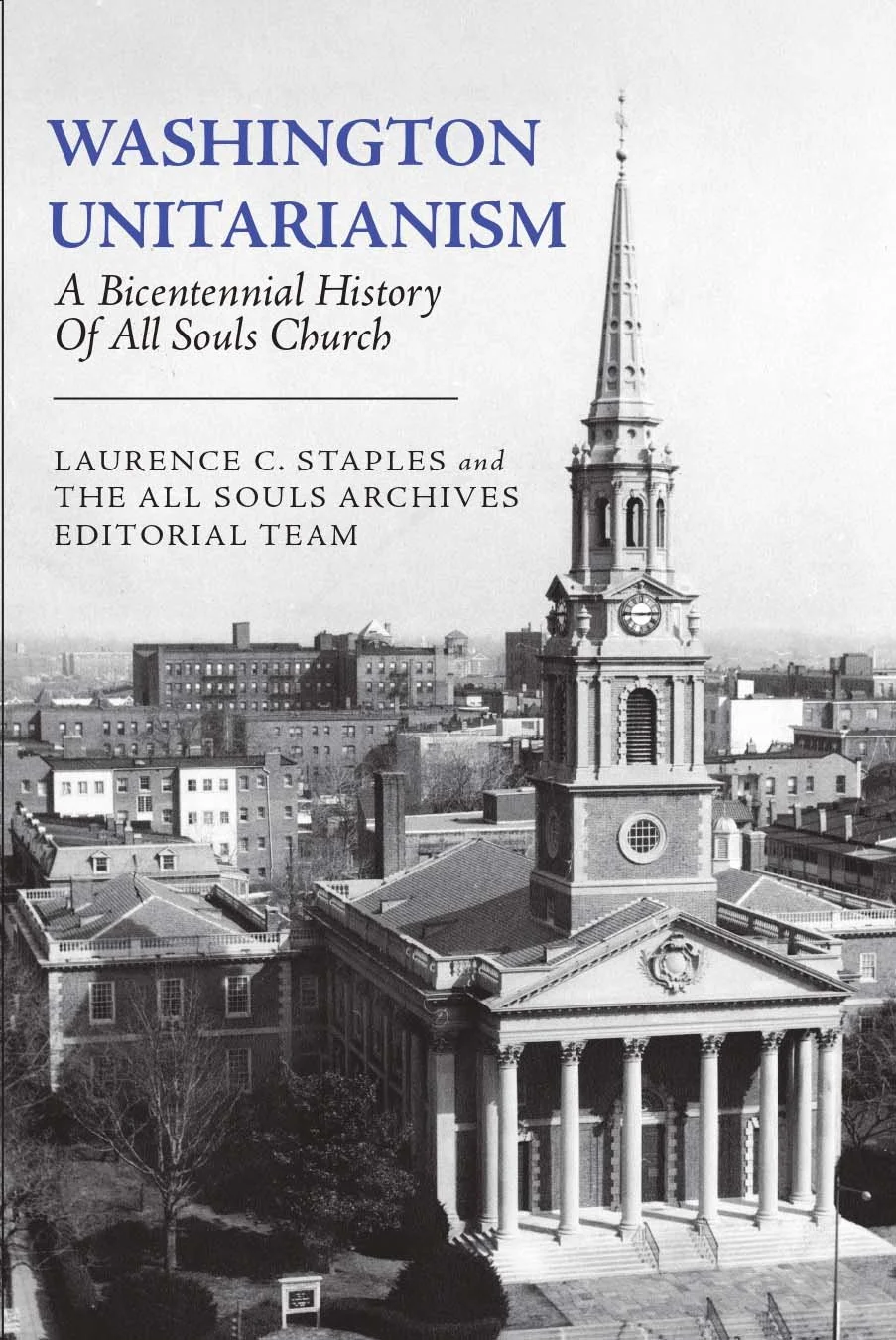
Laurence C. Staples’ Washington Unitarianism
All Souls minutes and personal remembrances
The Norton Anthology of African American Literature.